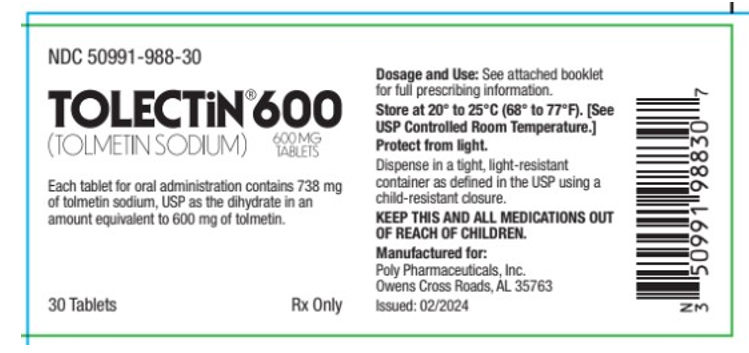
Tolectin
Why is this medication prescribed?
Tolmetin is used to relieve pain, tenderness, swelling, and stiffness caused by osteoarthritis (arthritis caused by a breakdown of the lining of the joints) and rheumatoid arthritis (arthritis caused by swelling of the lining of the joints). Tolmetin is also used to relieve pain, tenderness, swelling, and stiffness caused by juvenile rheumatoid arthritis in children 2 years of age and older. Tolmetin is in a class of medications called NSAIDs. It works by stopping the body's production of a substance that causes pain, fever, and inflammation.
How should this medicine be used?
Tolmetin comes as a tablet and a capsule to take by mouth. Adults usually take tolmetin three times a day on an empty stomach, and children older than 2 years of age usually take tolmetin three or four times a day on an empty stomach. Take tolmetin at around the same times every day. It is best to take the first dose of the day just after waking in the morning and to take the last dose of the day at bedtime. Follow the directions on your prescription label carefully, and ask your doctor or pharmacist to explain any part you do not understand. Take tolmetin exactly as directed. Do not take more or less of it or take it more often than prescribed by your doctor.
Tell your doctor if tolmetin upsets your stomach. Your doctor may tell you to take tolmetin with an antacid to prevent stomach upset. Your doctor will tell you which antacids are safe to take with tolmetin.
Tolmetin may help to control your symptoms but will not cure your condition. Your symptoms may improve within one week after you start to take tolmetin, but it may take several weeks or longer for you to feel the full benefit of the medication. Talk to your doctor about how tolmetin is working for you.
Other uses for this medicine
Tolmetin is also used to treat ankylosing spondylitis (arthritis that mainly affects the spine). It is also sometimes used to treat certain conditions that cause muscle strain or swelling in the shoulder or elbow and injuries such as recent sprains.
This medication is sometimes prescribed for other uses; ask your doctor or pharmacist for more information.
What special precautions should I follow?
Before taking tolmetin,
tell your doctor and pharmacist if you are allergic to tolmetin, aspirin, or other NSAIDs such as ibuprofen (Advil, Motrin) and naproxen (Aleve, Naprosyn), any other medications, or any of the inactive ingredients in tolmetin tablets or capsules. Ask your pharmacist for a list of the inactive ingredients.
tell your doctor and pharmacist what prescription and nonprescription medications, vitamins, nutritional supplements, and herbal products you are taking or plan to take while taking tolmetin. Your doctor may need to change the doses of your medications or monitor you carefully for side effects.
the following nonprescription products may interact with tolmetin: aspirin and other NSAIDs such as ibuprofen (Advil, Motrin) and naproxen (Aleve). Be sure to let your doctor and pharmacist know that you are taking these medications before you start taking tolmetin. Do not start any of these medications while taking tolmetin without discussing with your healthcare provider.
tell your doctor if you have or have ever had any of the conditions mentioned in the IMPORTANT WARNING section or asthma, especially if you also have frequent stuffed or runny nose or nasal polyps (swelling of the lining of the nose); heart failure; swelling of the hands, feet, ankles, or lower legs; or liver or kidney disease.
tell your doctor if you are pregnant, plan to become pregnant; or are breast-feeding. Tolmetin may harm the fetus and cause problems with delivery if it is taken around 20 weeks or later during pregnancy. Do not take tolmetin around or after 20 weeks of pregnancy, unless you are told to do so by your doctor. If you become pregnant while taking tolmetin, call your doctor.
talk to your doctor about the risks and benefits of taking tolmetin if you are 75 years of age or older. Do not take this medication for a longer period of time or at a higher dose than recommended by your doctor.
if you are having surgery, including dental surgery, tell the doctor or dentist that you are taking tolmetin.
you should know that this drug may make you dizzy. Do not drive a car or operate machinery until you know how this drug affects you.
What special dietary instructions should I follow?
Unless your doctor tells you otherwise, continue your normal diet.
What should I do if I forget a dose?
Take the missed dose as soon as you remember it. However, if it is almost time for the next dose, skip the missed dose and continue your regular dosing schedule. Do not take a double dose to make up for a missed one.
What side effects can this medication cause?
Tolmetin may cause side effects. Tell your doctor if any of these symptoms are severe or do not go away:
diarrhea
constipation
gas
weight gain or loss
headache
depression
skin irritation
ringing in the ears
Some side effects can be serious. If you experience any of the following symptoms, or those mentioned in the IMPORTANT WARNING section, call your doctor immediately. Do not take any more tolmetin until you speak to your doctor:
changes in vision
unexplained weight gain
shortness of breath or difficulty breathing
swelling of the stomach, feet, ankles, or lower legs
fever
blisters
rash
itching
hives
swelling of the eyes, face, lips, tongue, throat, arms, or hands
difficulty swallowing
hoarseness
yellowing of the skin or eyes
excessive tiredness
unusual bleeding or bruising
lack of energy
upset stomach
loss of appetite
pain in the upper right part of the stomach
flu-like symptoms
pale skin
fast heartbeat
cloudy, discolored, or bloody urine
back pain
difficult or painful urination
Tolmetin may cause other side effects. Call your doctor if you have any unusual problems while taking this medication.
If you experience a serious side effect, you or your doctor may send a report to the Food and Drug Administration's (FDA) MedWatch Adverse Event Reporting program online (https://www.fda.gov/Safety/MedWatch) or by phone (1-800-332-1088).
What should I know about storage and disposal of this medication?
Keep this medication in the container it came in, tightly closed, and out of reach of children. Store it at room temperature and away from excess heat and moisture (not in the bathroom).
Keep all medication out of sight and reach of children as many containers are not child-resistant. Always lock safety caps. Place the medication in a safe location – one that is up and away and out of their sight and reach. https://www.upandaway.org
Dispose of unneeded medications in a way so that pets, children, and other people cannot take them. Do not flush this medication down the toilet. Use a medicine take-back program. Talk to your pharmacist about take-back programs in your community. Visit the FDA's Safe Disposal of Medicines website https://goo.gl/c4Rm4p for more information.
In case of emergency/overdose
In case of overdose, call the poison control helpline at 1-800-222-1222. Information is also available online at https://www.poisonhelp.org/help. If the victim has collapsed, had a seizure, has trouble breathing, or can't be awakened, immediately call emergency services at 911.
What other information should I know?
Before having any laboratory test, tell your doctor and the laboratory personnel that you are taking tolmetin.
Do not let anyone else take your medication. Ask your pharmacist any questions you have about refilling your prescription.
Keep a written list of all of the prescription and nonprescription (over-the-counter) medicines, vitamins, minerals, and dietary supplements you are taking. Bring this list with you each time you visit a doctor or if you are admitted to the hospital. You should carry the list with you in case of emergencies.
Brand names
Tolectin