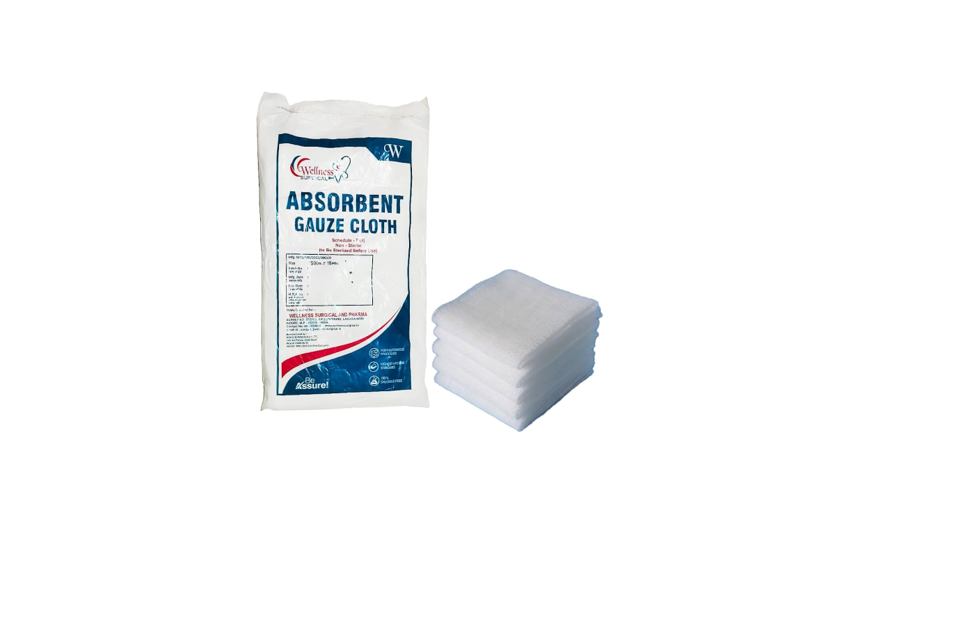
Gauze
Gauze is often used as a generic term to cover a wide range of dressing products. However, gauze products have numerous subcategories that differ according to fabric construction or material composition. The two major groups are referred to as (i) woven or (ii) non‐woven. It is important that practitioners differentiate between these subcategories as product characteristics, and performance will differ within each group (1).
Non‐woven gauze dressings are generally made of rayon or synthetic fibre blends. Not to be confused with woven gauze, these dressings were introduced to replace woven products as they have a lower adherence to the wound bed and are less likely to release lint (1, 2).
Woven products, often referred to as absorbent gauze, are generally made of 100% natural cotton yarns and have been manufactured the same way for centuries. It is this type of gauze that has the potential to cause more problems than any other, as it will shed fibres when cut and is prone to linting with fibres remaining in the wound after dressing removal (2, 3). Woven gauze is the oldest dressing still in use and dates as far back as the Ancient Egyptians who used it to wrap bodies prior to burial.
Prior to the 1960s, gauze was used for all wound types and was especially useful for the extensive injuries inflicted on soldiers during combat. Used in large quantities, woven gauze dressings were able to absorb wound exudate and provide the type of environment that would allow the wound to form an eschar (4).
Although there was little else available, it was viewed as an acceptable dressing as, at that time, it was assumed a dry wound environment would facilitate the death of bacteria (5).
This drying process was also seen to aid debridement of the wound, because as the gauze dried the non‐viable tissue would adhere to and be removed when the dressing was taken off.