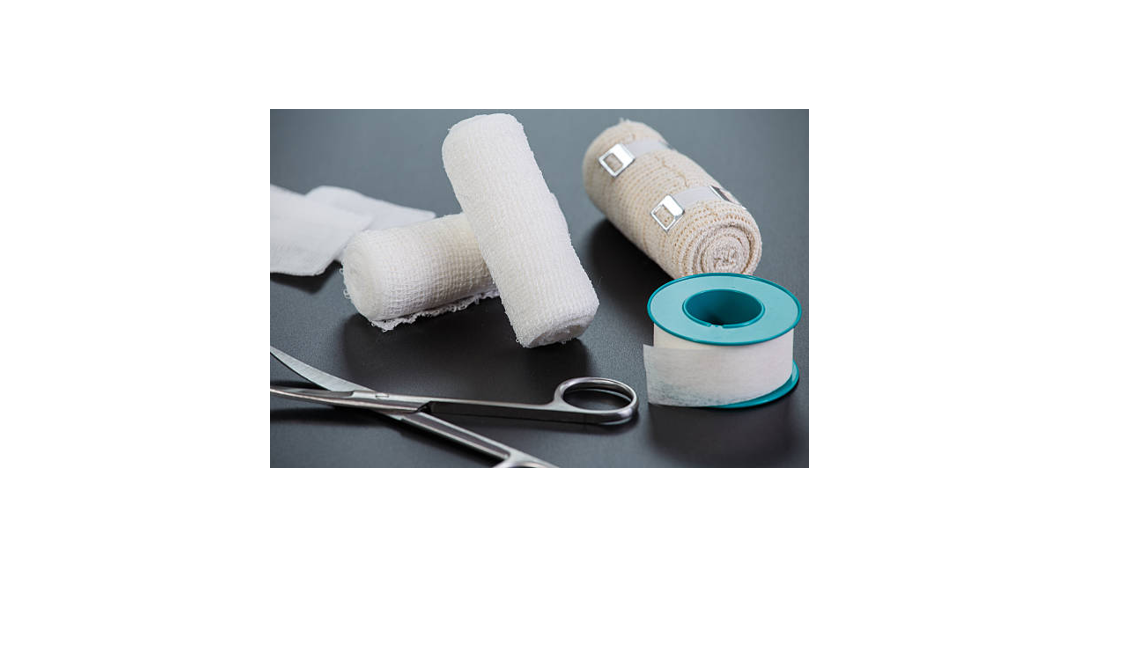
Dressings
Dressing is one of the crucial wound management materials. Wound dressing is defined as a sterile compress acting as a barrier to protect the injured epidermal tissues from outside and promoting the healing process. Dressing is in direct contact with the wound, and a bandage is usually used to hold a dressing in place. Wound dressing should be moisture and oxygen permeable and protect the wound against microorganisms (Dhivya et al., 2015).
Based on wound healing mechanism, the ideal characteristics of a proper wound dressing can be listed as 1) providing moist environment, 2) protection against bacterial infection, 3) enhancing epidermal migration, 4) allowing gas exchange between wounded tissue and surrounding environment, 5) absorbing excess exudates without leakage to the surface of a dressing, 6) increasing cell proliferation, 7) providing thermal insulation to improve the blood flow, 8) promoting angiogenesis and tissue synthesis, 9) providing debridement action and protecting the wound bed from mechanical trauma, 10) being non-adherent to the wound and easy to remove after healing without irritation, and 11) being sterile, biocompatible, non-toxic, non-allergic and non-scaring (Boateng et al., 2008; Zahedi et al., 2010; Dhivya et al., 2015).
3.1 Types of wound dressing
Wound dressings have been categorized according to types of dressing applied on the wound site. For example, primary dressings make physical contact with the injured tissue directly while secondary dressings cover the primary dressing. The third category is island dressings which contain a central absorbent region surrounded by an adhesive part. In addition, wound dressings can be classified based on their function, type of employed materials and their physical form (Boateng et al., 2008; Felgueiras and Amorim, 2017). Historically, old wound care treatments included crude applications of poultices of mud, milk, plants, and honey as bandages (Boateng et al., 2008). In recent years, extensive deal of attention has been attracted to the development of novel fabricated wound dressing with improved performance in accelerating skin regeneration and promoting wound healing (Vasconcelos and Cavaco-Paulo, 2011).