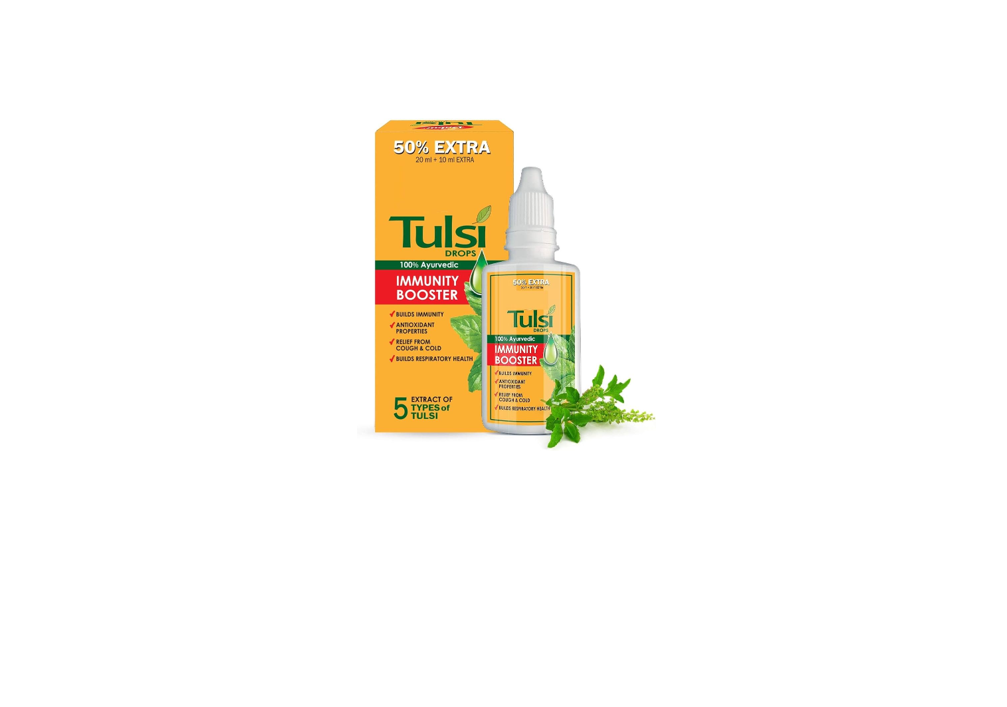
Tulsi Extract
Tulsi, also known as Ocimum tenuiflorum or holy basil, is a revered herb from the Lamiaceae family. Widely recognized in India for its medicinal and spiritual significance, this plant has been used for centuries due to its extensive therapeutic benefits. Tulsi is commonly recommended for managing skin disorders, arthritis, inflammation, and even for reducing cancer risk. Often referred to as the "Queen of Herbs," it is also celebrated for its natural ability to alleviate stress and anxiety, promoting overall relaxation and well-being [1]. Toxicological research indicates that Ocimum tenuiflorum is a safe herb for human use, with no significant toxic effects. Its essential oil, recognized as a chemosystematics trait of the plant, serves as a rich natural source of eugenol. This oil holds substantial commercial value and is widely utilized in the pharmaceutical, cosmetic, and food industries due to its anti-allergic and antimicrobial properties [2].
Because of its active ingredients, it has historically been used to treat colds, bronchitis, asthma, influenza, and cough. The necessity for easily accessible treatments has sparked interest in Tulsi as a supplemental treatment for respiratory conditions. Its effectiveness is supported by scientific research; for instance, a randomized controlled trial discovered that Tulsi leaf extract considerably improved lung function and lessened asthma symptoms, reducing the need for inhalers. Tulsi has been linked to decreased oxidative stress markers and less coughing and respiratory discomfort in patients with COPD and chronic bronchitis [3], [4].
Tulsi has numerous therapeutic properties, including adaptogenic, antibacterial, anti-inflammatory, cardio-protective, and immune-modulatory benefits, according to numerous in vitro, animal, and human research [5].
Using a chronic variable stress (CVS) model, the study assessed Ocimum sanctum's anti-stress properties. Compared to the CVS control group, rats given O. sanctum for 16 days had higher body weights and less immobility in the forced swim test. Furthermore, O. sanctum and its constituents affected 11β-hydroxy steroid dehydrogenase type 1 (11β-HSD1) and catechol-O-methyl transferase (COMT) in cell-free experiments, decreased cortisol release, and functioned as CRHR1 receptor antagonists in cell assays. Overall, via modifying cortisol and associated pathways, O. sanctum showed promise in stress management [6].
With a prevalence of 4.8 % worldwide and rising since the COVID-19 pandemic, anxiety disorders are characterized by excessive and protracted anxiety that affects social functioning, mental health, and quality of life. They frequently co-occur with other conditions, making therapy more challenging. Asthma and COPD are two major worldwide health issues that are also impacted by socioeconomic status and access to healthcare. There are significant hazards for people with pre-existing ailments, and the COVID-19 pandemic has varying consequences on respiratory illnesses globally. Sleep disturbances have a detrimental impact on general wellbeing and are linked to respiratory health [7].
Infections of the respiratory tract are prevalent and cause significant morbidity in adults. Approximately 440 million children reside in India, with about 2 million not reaching the age of 5 due to such infections. This study compared the effects of steam inhalation and Tulsi leaves inhalation on symptoms of cold and cough among adults in Pune. Conducted with the approval of an institutional research committee, a quantitative pre-test and post-test design was used, involving 60 participants. Statistical analysis indicated a significant reduction in cough and cold symptoms, with Tulsi leaves proving more effective than steam alone. The findings suggest that combining steam inhalation with Tulsi extract accelerates recovery from respiratory symptoms [8].
According to a 1993 World Health Organization (WHO) survey, traditional medicine practitioners are responsible for treating approximately 80 % of patients in India, 85 % in Myanmar (formerly Burma), and 90 % in Bangladesh. In traditional medical systems, Indian medicinal plants have proven effective in managing a variety of health conditions, including bronchial asthma, persistent fevers, colds, coughs, malaria, dysentery, convulsions, diabetes, diarrhea, arthritis, skin disorders, insect bites, stress and emetic syndromes [9].
Studies have highlighted the therapeutic potential of Ocimum tenuiflorum, showcasing a wide range of pharmacological properties such as anti-inflammatory, antioxidant, antimicrobial, anticancer, antidiabetic, antistress, antiviral, antifertility, anthelmintic effects. A recent GC-MS analysis conducted in our laboratory identified several prominent phytocompounds in the hydroethanolic extract of Ocimum leaves, including eugenol, cyclohexane, bicycle[7.2.0]undec-4-ene, 4,11,11-trimethyl-8-methylene, oxatricyclo[8.2.0.0(4,6)] dodecane, 12-trimethyl-9-methylene, tetracontane, and phytol [10].
Tulsi (Ocimum tenuiflorum L.), native to the Indian subcontinent, holds significant importance in traditional medicine systems like Ayurveda and Siddha. Various in vitro and human studies have demonstrated tulsi’s wide range of therapeutic effects, including antibacterial and cardioprotective activities. However, comprehensive evaluations of tulsi's clinical safety in human trials are still lacking. We conducted an extensive literature review of human studies reporting clinical outcomes following tulsi consumption. Databases such as PubMed, Science Direct, and Indian medical repositories were searched for relevant studies, hypotheses, and published data. The available research consistently reported positive clinical outcomes without any major adverse events. Nevertheless, further investigations are needed to better understand tulsi’s mechanisms of action, optimal dosing, and appropriate portion sizes. Overall, the findings suggest that tulsi may offer a promising therapeutic approach for lifestyle-related conditions and could be more effective than some traditional treatments. Ocimum tenuiflorum (commonly known as Tulsi, meaning "the incomparable one" in Hindi) has been classified as a Rasayana herb in classical Ayurvedic scriptures such as the Charaka Samhita, Sushruta Samhita, and the Rigveda (dating back to 3500–1600 BCE). Traditionally, it has been used to treat a variety of ailments, including respiratory issues, cough, poisoning, impotence, and arthritis. Regarded as a sacred plant in Indian culture, Tulsi is also known for its therapeutic applications as a nervine tonic and adaptogen. It has shown promise in supporting cancer care and alleviating stress-related conditions [11].